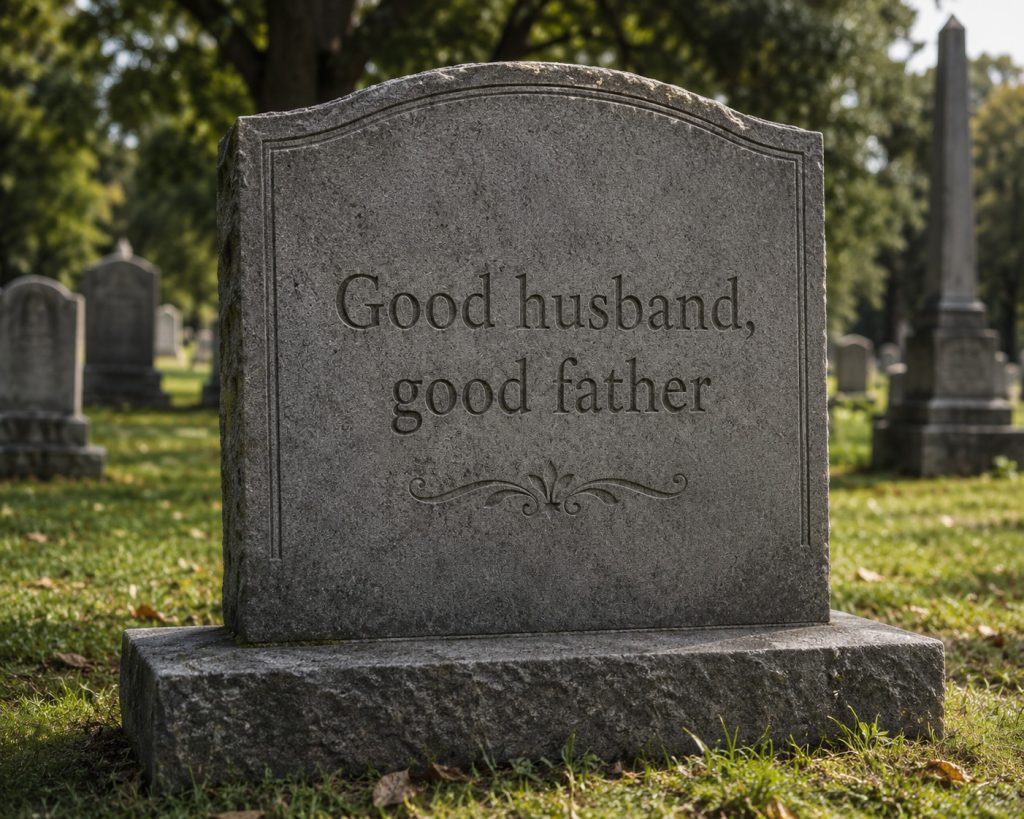
Before Bonnie’s death, I had never thought of myself as a caregiver. Husband, father, provider — yes. I used to tell Bonnie that what I wanted on my tombstone was Good husband, good father. If I had accomplished that, I would be proud of the life I lived.
I never imagined I’d make a very good caregiver. Not because I didn’t love Bonnie — quite the opposite. I simply didn’t see myself in that role. Nurses and doctors had gifts I didn’t believe I possessed.
But love has a way of unlocking capabilities we never knew we had. When the woman I loved needed me, I didn’t ask whether I was qualified. I focused on what she needed.
Many men, like me, are what grief researchers call “instrumental grievers” — though I just knew myself as a fixer. We see a problem and look for a solution. Bonnie’s cancer became the biggest problem I had ever faced, and I threw myself into solving it because action was the only way I knew how to survive the fear.
When her third treatment stopped working and her oncologist said there were no more options, I found another oncologist. When Bonnie could no longer transfer herself into the car, I researched wheelchair-accessible vans. When a door closed, I looked for another one to open. Every challenge became a problem to solve, a battle plan to develop. As long as there was another doctor to call or treatment to consider, there was still hope. And I needed that hope to keep going.
Looking back, there are things I wish someone had told me.
I wish I had understood how serious a cancer diagnosis remains, even after treatment ends. Years before Bonnie was diagnosed with pancreatic cancer, she had completed treatment for an earlier cancer and was declared cancer free. I took those words at face value — the battle was won, we could move forward. What I didn’t understand was that cancer free doesn’t mean cancer is gone forever. Had I known that, I would have viewed those follow-up appointments differently. Not as routine checkups, but as an essential safeguard.
I also wish I had sought out specialists and major cancer centers sooner. It was during my desperate research that I learned about MD Anderson and a targeted drug called Pemazyre. Whether either would have changed Bonnie’s outcome, I can’t know. I just wish I had found them earlier. Medicine changes quickly. New treatments emerge, clinical trials open, and specialists often have access to options not widely known elsewhere. I learned that families need to ask questions, seek second opinions, and advocate hard. I wish I had understood that from the start.
Most of all, I wish I had known that loving someone through cancer is not the same as saving them from cancer.
I never fully accepted that Bonnie was going to die. When she did, part of me felt I had failed. It took a long time to understand I had been measuring the wrong thing. The purpose of loving someone through cancer is not to defeat the disease — sometimes that simply isn’t possible. The purpose is to walk beside them, carry part of the burden, and stay present.
When she died, my mission disappeared. For three years there had been appointments to schedule, medications to monitor, decisions to make. Suddenly there was nothing left to solve. The woman I had spent three years fighting for was gone, and for the first time I was left with something I couldn’t fix.
I no longer needed answers about cancer. I needed answers about grief.
I was surprised by how hard it was to find resources that spoke to me. Most grief books were written by women. Some were helpful, but I kept wondering — where were the husbands? Where were the fathers trying to hold a family together while carrying their own grief?
I didn’t have to look far to see that grief looks different from one person to the next. My sons and I were grieving the same person, but our grief looked nothing alike. I talked about Bonnie often. They rarely brought her up. I don’t fully know how they carry that loss — only that they do, in their own way.
I still think about that tombstone. I still want those words — good husband, good father — to be the sum of my life. But I’ve learned those roles aren’t about solving problems or winning battles. They’re about showing up when there’s no fix, and staying present when the path ahead is dark.
I couldn’t save Bonnie from cancer. But I loved her through it.